


Tick Tips!
Follow the tips and don’t get bit!

Be Aware!
Ticks can be found almost anywhere outdoors, year round! The best prevention is paying attention.

Be Prepared!
When you go outdoors, wear an EPA registered insect repellant, and protective clothing. The best defense is… uh… defense, it turns out.

Check Everywhere!
When you come back inside, take a shower, and check everywhere! We mean everywhere: Up top! Bend over!

Don’t be scared.
If you do get a tick, there’s no need to panic. Follow safe removal instructions below, and call your doctor with any questions!
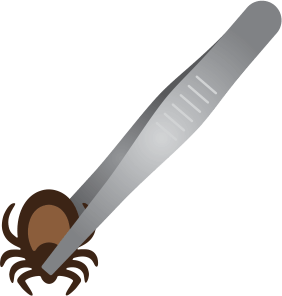
I’ve got a tick!
NOW WHAT?!
If you have a tick attached to your skin, it’s important to remove it the right way. Print this step-by-step guide and keep it handy.
Tick removal guide Guía Español

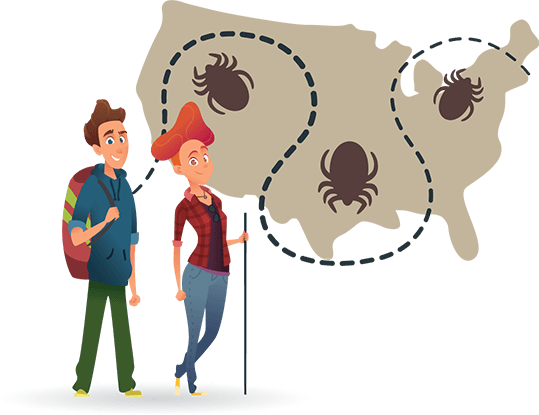
Where are
the ticks?
Take a look maps of where in America you’ll find the different types of disease-carrying ticks.
u.s. tick mapsWhat diseases
do ticks carry?
Click here for a list of the diseases and illnesses known to be transmitted by ticks.
Ticks & diseases

Am I sick?
Ticks can carry multiple diseases, which can have immediate and later-stage symptoms. You won’t always get immediate symptoms if you’ve contracted a disease from a tick, but there are definitely things to look out for.
Lyme SymptomsWhat else should I know about Lyme Disease?
Lyme disease is the most common tickborne disease with an estimated 300,000 new cases in the US each year. To learn more, visit the Centers for Disease Control or the Johns Hopkins Lyme Disease Research Center.
CDC Lyme Disease GuideTick FAQs
-
Can I get sick from a tick that is crawling on me but didn't bite?
A tick has to bite you to infect you with its germs. If the tick hasn’t attached to your skin, you can’t contract the diseases it might be carrying. But finding one tick on your body means others could be lurking. So, do a thorough tick check. And if you have been bitten, remove the tick as soon as possible.

-
How long do ticks need to stay attached to cause an infection?
Ticks can spread disease within minutes to days after attaching to your skin.
-
What diseases do ticks carry and do different species carry different diseases?
There are at least 16 known tickborne diseases, including Lyme disease, Rocky Mountain spotted fever, ehrlichiosis, and babesiosis. Lyme disease is spread by the bite of a blacklegged tick called Ixodes scapularis or Ixodes pacificus. While blacklegged ticks can also cause other illnesses, species like the American dog tick, brown dog tick, Rocky Mountain wood tick, or Lone Star tick, carry different diseases.
-
How do I identify the type of tick that bit me?
Sometimes you can tell what kind of tick bit you based on what the tick looks like and where you were when you got bitten. However, nymphal ticks, which are the size of poppy seeds, can be too small to identify properly and the range of tick habitats is constantly changing. Contact your local department of health to see how you can send in a tick to be identified.
-
How do ticks spread disease?
Ticks will feed on a host animal, such as a mouse, that is infected with a bloodborne pathogen. As the tick feeds, it will ingest the pathogen. When the tick later feeds on another host animal, such as a human, it may pass the pathogen onto this new host.
-
How can I prevent tick bites?
There are many ways to reduce your exposure to ticks and tick bites, including avoiding known tick habitats, wearing protective clothing, using EPA-registered insect repellent, checking your body for ticks, and checking your gear and pets after being outdoors, among others.
-
Are ticks active in winter months?
Yes. Even though winter is relatively lower risk, ticks can be active any time the temperature is above freezing (32 degrees Fahrenheit). This includes insulated areas, such as leaf litter, that have been warmed by the sun on otherwise cold days.




tick talk
Get tips, updates, and reminders about protecting your family from tick-borne diseases.